January 17, 2012

Just another job search manual

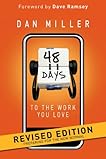
48 Days to the Work You Love48 Days to the Work You Love by Dan Miller

My rating: 3 of 5 stars

This book will help you if you're looking for a traditional job. It contains advice on resume writing and job search tactics, and a thorough section on interviewing skills.

But if "the work you love" is nontraditional -- freelance work or self-employment -- look elsewhere. Despite the author's admission that "the new normal" includes more such work, the job-hunting sections assume that "work" means a place on a corporate payroll. There are only two chapters about self-employment. The first spends a lot of time convincing you it can be done--but doesn't give details about how. The other offers a bunch of anecdotes, but no tactics for starting a business or advice for freelancers.

The sections on self-discovery -- figuring out who you are and what kind of work might be "the work you love" -- are also pretty flimsy. So look elsewhere if you're trying to discover what work is a good fit for you.

Some parts of this book are quite inspirational, but ultimately I can't recommend it. In addition to scattered typos ("tot" instead of "to" -- in all-caps, no less; an R missing from "unfotunately"), there's a clear lack of proofreading and fact-checking. The name of the famous missionary David Livingstone is misspelled, omitting the final E. The average time Americans spend in a job is variously given as 2.2 years and 3.2 years. One of them may be right, but which?

Most troubling to me is the repetition of the Shackleton advert myth. It only takes a Google to learn that this anecdote remains unsubstantiated despite the best efforts the Antarctic Circle organization to prove it. Miller's inclusion of this misinformation leads me to wonder what else in the book may be incorrect.


View all my reviews

January 13, 2012

Put it in your own words

Dictionaries, and dictionary apps,
are useful. But don't use them as crutches.
I recently read a book in which the author repeatedly employed what I call the "Webster cliche." This is the bit where the author brings up an element of his topic, and then, assuming the element is unfamiliar to the reader, writes something like this:

Webster's defines "element" as "one of the simple substances air, water, fire, and earth of which according to early natural philosophers the physical universe was composed."

Several problems can arise here, and I'm not talking about the fact that I picked a different definition of "element" than one would expect from the context of the first paragraph.

For starters, "Webster's" is an incomplete citation. The complete citation for the definition above would be: Webster's Third New International Dictionary, Unabridged. Merriam-Webster, 2002. http://unabridged.merriam-webster.com (10 Jan. 2012).

Yeah. We all know you meant that. But the idea is to not get a cease-and-desist letter from Merriam-Webster's copyright attorneys.

Difficulties protecting the Webster trademark led to a proliferation of dictionaries with the name "Webster" on them, to the point that by the middle of the twentieth century almost any dictionary might be labeled "Webster's," regardless of the thoroughness of its lexicography or its actual connection to the work of Noah Webster. Because of the diligence of the aforementioned attorneys, this problem has largely been cleared up.

I don't mean to imply that you can't use Willy Webster's Upteenth Unabridged if you want to. Just get the citation right. Or you could get two letters.

But citations lead to another problem. In the book I mentioned, the author employed the Webster cliche eleven times, all within in the first few chapters. It became repetitive and annoying.

But, you argue, one must ensure the reader understands what one means when one says "element."

True. Do that by telling the reader what you mean. Do it on your own authority. If you are writing a book, you are establishing yourself as an expert in the field. Be the expert. You don't need ol' Noah Webster or either of the Merriam brothers to do it for you. Just say it.

An element is any part that contributes to the whole.

January 9, 2012

Delightful adventure

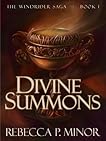
The Windrider I: Divine Summons (The Windrider Saga)The Windrider I: Divine Summons by Rebecca P. Minor
My rating: 4 of 5 stars

This adventure story is centered around a couple of charming characters who are just annoying enough to be realistic, without being so annoying you don't want to spend time with them.

The funny thing is, as Vinyanel and Veranna annoy the blazes out of each other, they don't seem to realize that they're both annoying for the same reason: arrogance. Fortunately they have the level-headed Majestrin, whose gravitas anchors them. And since Vinyanel and Veranna both excel in their own ways -- he as a warrior and she as a prophetess -- we enjoy their company and forgive their flaws.

Minor has created a rich fantasy world and pulls off that trick that so many of us find so hard -- she's implied a long history of conflict between two races by letting us experience the results of the history through the lives of the characters. No long, boring expository passages here. The story moves along at a quick clip.

The prose is occasionally lofty and a bit stilted; this may be a feature some fans of High Fantasy will see as a plus. I found it a bit off-putting. But then, I feel the same way when Tolkien does it.

There are several plot elements to keep track of: an enemy invasion, the quest for a sacred chalice, the appointment of the king's new champion and the formation of a new band of dragon-riders. The connections between all things things are barely hinted at, yet the subtext tells me the connections must exist. I look forward to seeing how things come together in part two.

I also look forward to spending more time with my new friends.

View all my reviews

December 24, 2011

Our traditional view of the nativity is wrong

Photo by Kristen Stieffel.
Yeah, I put this up every year, despite the inaccuracies. 

Most of our nativity scenes, depicting the holy family in a wooden shed with some animals, a shepherd or two, and three kings, are—how can I put this gently—wrong. I wrote earlier about the visit of the unknown number of non-royal persons. But the whole picture, especially the lonely couple relegated to a lean-to, doesn’t match what scholars know of that time and place.

In teaching our advent study this year, based on Adam Hamilton’s excellent book and video The Journey: Walking the Road to Bethlehem, I added a new word to my Greek vocabulary: καταλυμα, or kataluma.

It appears here:
And she gave birth to her firstborn son and wrapped him in bands of cloth, and laid him in a manger, because there was no place for them in the inn. (NRSV)
The same word is used in Luke 22:11 to identify the upper room where Jesus observed Passover with his disciples.

A kataluma is a guest room. So why does almost every English translation have “inn” at 2:7 but “guest room” at 22:11? Much as I’d like to lay all the blame on King James’s translators, William Tyndale did the same thing.

Dr. Kenneth E. Bailey wrote, in the Theological Review of the Near East School of Theology, “the Arabic and Syriac versions have never, in 1900 years, translated kataluma with the word ‘inn.’ This translation is a product of our Western heritage.”

Bailey goes into great detail about first-century life in the holy land and Middle Eastern culture. It comes down to this: A room on the ground floor would be used by the family during the day, but the animals would be brought into it at night for safety. So it would have feeding troughs in it. The family and guests slept on an upper level.

Hamilton points out that since Bethlehem was Joseph’s hometown, they probably stayed with family. Instead of a wooden shed, Mary and Joseph were likely in what Bailey calls “the family room.”

So although some newer versions, like Today's New International Version, put “there was no guest room available for them,” many translators stuck with “no room in the inn” for no better reason than: That’s what we’re all used to. 

Mind you, it doesn't really matter whether it was a barn or a four-star resort. The apostle John reminds us of the important thing: God put on flesh to dwell with us. Praise be to God.

December 20, 2011

A lovely place to visit

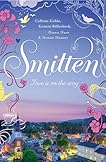
SmittenSmitten by Colleen Coble
My rating: 4 of 5 stars

The town of Smitten, Vermont, is as much a character in this book as the four women who make up its core. This is not a novel, but a tetralogy of novellas, each with a different heroine. Disclosure: I was given an advance reader copy of this book at a conference.

The authors do a great job of intertwining their characters’ lives, and their voices are similar enough that the stories flow into one another without clashing. The overall story arc, of the character’s efforts to transform Smitten from mill town to vacation destination, runs as a thread through all four stories, binding them together. Together, the authors create an appealing place we would like to go visit.

The characters are well-rounded, and although some of them have superficial quirks, those add to, rather than substitute for, some very realistic, deep-rooted traits that make the characters believable.

The quality of the writing is very high, although there are a few continuity problems. A character suddenly has an object in her hands that we never saw her pick up -- where did that come from? One character is introduced as a good friend -- halfway through the book. Another, who appears early in a minor role, is described as one woman's "best friend." If he's her best friend, how come she doesn't talk to him until we're three-quarters of the way through the book?

But these are quibbles. Overall, this is a charming set of stories that make for a delightful getaway.


View all my reviews

December 15, 2011

Sorting out "less than" and "fewer" isn't difficult

Writers are notoriously bad at math, but that doesn’t explain the prejudice against “less than” in expressions with countable items.

Photo by Zsuzsanna Kilian — sxc.hu
The sticklers are correct when they say “fewer” can be used only with countable items, not masses. If your hen laid six eggs yesterday and only four today, then today she laid fewer eggs. But when you crack eggs into a bowl and whisk them together, they cease to be eggs and become “egg.” So there’s less egg in the bowl today than there was yesterday. But you wouldn’t say there’s fewer egg in the bowl. Even without a grammarian’s advice, you wouldn’t say that, because it feels wrong.

Fewer eggs but less egg. Fine. The problem comes when people assert that since “less” goes with egg, it can only go with egg and may not go with eggs. These are the sort who call the grocery store sign “ten items or less” grammatically incorrect and claim “ten items or fewer” is the only correct form.

Fewer than ten, less than ten, ten or fewer, ten or less — all perfectly valid constructions. If you have nine items in your cart, you have less than the guy with eleven items. Or, as a mathematician might say, 9 < 11.

In the absence of a number, “than” is an important part of the construction. “Today the hen laid fewer (or less) eggs” begs for the completion of the comparison. Fewer (or less) than…what? Yesterday? Six? Her sister?

People don’t get quite as hung up on “greater” and “more than,” but the same principles apply. Except that if your hen laid four eggs yesterday and six today, you wouldn’t say today she laid greater eggs. You’d say she laid a greater number of eggs today than yesterday. Actually, you’d be likely to say she laid more eggs today. And you’d be correct.

November 30, 2011

Learning about practices that edify the church

Five Practices of Fruitful CongregationsFive Practices of Fruitful Congregations by Robert C. Schnase
My rating: 5 of 5 stars

I taught this as a small-group study at church, and the class loved it. You know the book is good when your students tell the preacher he should read it.

Schnase's book is full of thought-provoking ideas. I was pleased to say that a lot of suggestions we could check off as "got it," but there were still plenty of creative ideas to implement.

The author is Methodist and most of his examples come from that tradition, but I am sure any Protestant church -- any church, probably -- can glean information from this book to use in its own congregational life.

I found the author's Biblical examples to be a little thin, but then he wasn't writing a Bible study. I was teaching one, though, so I found a parable to illustrate each practice.

I especially appreciated the way Schnase shows how each practice provides a foundation for those that come after it.

View all my reviews